
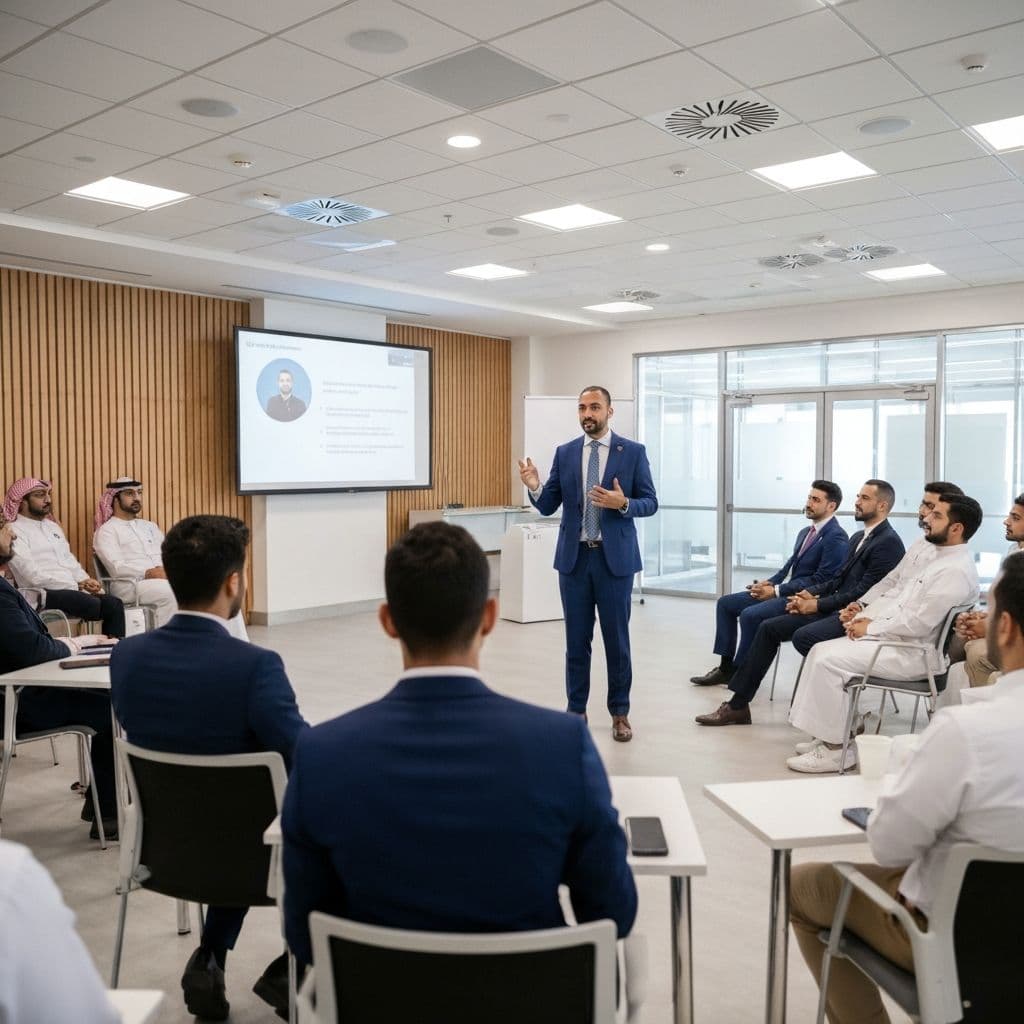
Leadership development in Saudi Arabia has become a strategic priority as the Kingdom accelerates its Vision 2030 transformation. With new mega-projects launching, emerging sectors scaling, and ambitious national goals to achieve, organizations need capable leaders at every level. Yet many companies struggle to build the leadership bench strength required for success.
This comprehensive guide reveals the leadership development strategies that top-performing Saudi organizations use to build world-class executives. You will learn how competency assessments accelerate leadership growth, what competencies matter most for Vision 2030, and how to create development programs that deliver measurable business results.
1The Saudi Leadership Imperative
Saudi Arabia's transformation agenda requires unprecedented leadership capacity. Vision 2030 is creating entirely new industries—tourism, entertainment, renewable energy—while modernizing existing sectors. This demands leaders who can navigate complexity, drive innovation, and develop Saudi talent at scale.
The Leadership Gap: Vision 2030 Demands
100K+
New leaders needed by 2030
75%
Cite leadership as top challenge
45%
Leadership roles currently unfilled
According to the Vision 2030 official portal, developing Saudi human capital is a cornerstone of national strategy. Organizations that invest in employee development and leadership programs gain significant competitive advantage.
Why Leadership Development Matters Now
- Saudization acceleration: More Saudi nationals advancing to leadership roles
- New sector emergence: Tourism, entertainment, tech require new leadership skills
- Digital transformation: Leaders must guide organizations through tech change
- Global competition: Saudi companies competing internationally need world-class leaders
2Core Leadership Competencies for Vision 2030
Effective Saudi leaders need a specific set of competencies that combine global best practices with cultural intelligence. Our research identifies six core competencies that define leadership success in the Vision 2030 era.
Strategic Thinking
Ability to see the big picture, anticipate market changes, and align team efforts with Vision 2030 goals.
- • Long-term planning
- • Market analysis
- • Resource allocation
People Development
Coaching, mentoring, and developing team members to reach their full potential and support Saudization.
- • Coaching skills
- • Delegation
- • Talent identification
Change Leadership
Guiding organizations through transformation while maintaining engagement and minimizing disruption.
- • Change communication
- • Resistance management
- • Transformation roadmaps
Cultural Intelligence
Leading diverse teams across Saudi, expat, and international contexts with cultural sensitivity.
- • Cross-cultural communication
- • Inclusive leadership
- • Global mindset
Digital Leadership
Understanding technology trends and leading digital transformation initiatives.
- • Digital strategy
- • Data-driven decisions
- • Innovation mindset
Results Orientation
Setting ambitious goals, driving accountability, and delivering measurable business outcomes.
- • Goal setting
- • Performance tracking
- • Accountability systems
Learn more about how competency assessments help identify which leadership competencies your managers need to develop most.
3Effective Development Approaches
The best leadership development combines multiple approaches in an integrated learning journey. Research shows that the 70-20-10 model delivers optimal results for developing leaders.
The 70-20-10 Leadership Development Model
On-the-Job Experience
Stretch assignments, cross-functional projects, leadership rotations, and real business challenges that build capability through doing.
Social Learning
Coaching, mentoring, peer learning networks, feedback, and learning from role models and experienced leaders.
Formal Training
Executive education programs, workshops, online courses, and certifications that build foundational knowledge.
Identify Your Leaders' Development Needs
Use competency assessments to create personalized leadership development plans
4Executive Coaching in Saudi Arabia
Executive coaching is one of the most powerful leadership development tools available. One-on-one coaching provides personalized guidance that accelerates leader development by addressing specific challenges and blind spots.
Executive Coaching ROI Statistics
788%
Average ROI
70%
Performance improvement
61%
Better relationships
57%
Self-awareness gains
According to the International Coaching Federation (ICF), executive coaching delivers measurable business impact when combined with clear goals and organizational support. In Saudi Arabia, coaching is particularly effective when integrated with performance management systems.
When to Use Executive Coaching
- Transition coaching: New executives moving into senior roles
- High-potential development: Preparing future leaders for advancement
- Performance improvement: Addressing specific leadership gaps
- Strategic projects: Leading complex transformation initiatives
5Assessment-Based Leadership Development
Assessment-based development delivers 50% faster leadership improvement by identifying specific competency gaps and creating targeted development plans. Rather than generic training, leaders receive personalized pathways based on their unique profile.
The Assessment-Based Development Process
Comprehensive Assessment
Evaluate leadership competencies across all critical dimensions using validated assessments
Gap Analysis
Compare current competency levels against role requirements and future aspirations
Personalized Plan
Create individual development plans targeting the 2-3 competencies with highest impact
Progress Measurement
Re-assess periodically to track improvement and adjust development focus
Our competency assessment evaluates leadership capabilities across six core domains, providing detailed insights for development planning. Combined with digital HR systems, this creates a data-driven approach to leadership development.
6Succession Planning & Talent Pipelines
Succession planning ensures your organization has a ready pipeline of leaders for critical roles. Without proactive succession management, companies face costly leadership vacuums when executives depart.
Succession Planning Steps
- 1.Identify critical leadership positions
- 2.Define competency requirements for each role
- 3.Assess high-potential candidates against requirements
- 4.Create development plans to close readiness gaps
- 5.Monitor progress and update pipeline annually
Succession Risks to Avoid
- Single successor dependency (key person risk)
- Succession plans without development action
- Ignoring external hire options
- Static plans never updated
- Lack of diverse candidate slates
Effective succession planning connects directly to talent acquisition and retention strategies—ensuring you both develop internal talent and have external pipelines for critical roles.
7Case Study: Saudi Energy Company
How a Major Saudi Energy Company Built 150 Leaders in 2 Years
The Challenge
A major Saudi energy company faced aggressive expansion plans requiring 150 new leaders within 24 months. Only 40% of target roles had ready successors, and external hiring was slow and expensive in the competitive energy sector.
The Solution
They implemented a comprehensive leadership development program starting with competency assessments for all high-potential employees. Personalized development plans combined stretch assignments, executive coaching, and targeted training.
Results After 24 Months
152
Leaders developed
85%
Internal promotions
68%
Saudi nationals
95%
Retention rate
"Competency assessments gave us the data to make smart development investments. We could see exactly what each leader needed and track their progress systematically."
8Frequently Asked Questions
What is leadership development in Saudi Arabia?
Leadership development in Saudi Arabia is the systematic process of building management and executive capabilities to lead organizations through Vision 2030 transformation. It includes executive coaching, management training, competency development, and succession planning tailored to Saudi business culture and national goals.
What are the key leadership competencies for Saudi managers?
Key competencies include strategic thinking, people development, change management, cultural intelligence, digital literacy, stakeholder management, and results orientation. Vision 2030 also emphasizes innovation, entrepreneurial mindset, and ability to lead diverse, multi-generational teams.
How much should companies invest in leadership development?
Leading Saudi organizations invest 5-10% of leadership payroll in development programs. For a senior manager earning 40,000 SAR monthly, this equals 24,000-48,000 SAR annually. ROI typically exceeds 400% through improved team performance, reduced turnover, and better business outcomes.
What is the best leadership development approach for Vision 2030?
The best approach combines competency assessment to identify development gaps, executive coaching for personalized growth, action learning projects tied to real business challenges, peer learning networks, and continuous feedback. Programs should align with Vision 2030 priorities like innovation and Saudization.
How do leadership assessments help develop better leaders?
Leadership assessments identify specific competency gaps, blind spots, and development priorities for each leader. They provide objective baseline data for personalized development plans, enable targeted coaching interventions, and measure progress over time. Organizations using assessment-based development see 50% faster leadership improvement.
9Your Next Steps
Building world-class leaders requires strategic investment and commitment. Start with these actionable steps to transform your leadership development approach.
Ready to Develop Your Leaders?
Assess Competencies
Identify each leader's strengths and development needs
Create Development Plans
Build personalized pathways for high-impact growth
Build Your Pipeline
Develop successors for critical leadership roles
Use the assessment as a starting point, then match the next step to the role, team, and business decision.
Related Articles
Employee Development & Training in Saudi Arabia
Comprehensive workforce development strategies for Vision 2030
AssessmentEmployee Competency Assessment in Saudi Arabia
How assessments identify development needs and boost productivity
RecruitmentTalent Acquisition & Recruitment in Saudi Arabia
Strategies for attracting and hiring future leaders
PerformancePerformance Management Systems in Saudi Arabia
Modern KPI systems and continuous feedback for leaders